


The ROI of Engagement Calculating the True Cost of Employee Turnover for Successful Businesses
Employee turnover cost is the total financial and operational loss an organization incurs when a worker leaves, encompassing recruitment, onboarding, lost productivity, and cultural erosion. In 2026, the benchmark for a mid-level manager’s replacement cost is between 1.5x to 2.0x their annual salary. For specialized roles, this figure can climb to 250% due to the scarcity of high-tier human capital.
Key Takeaways
The 2x Rule: Expect to spend double a departing employee’s salary on their replacement.
Productivity Debt: It takes an average of 8 months for a new hire to reach full ROI potential.
Institutional Memory Loss: Turnover isn’t just a vacancy; it’s a loss of client relationships and “flow.”
DIY Failure: In-house culture “fixes” often fail because internal teams cannot objectively diagnose their own bias.
Professional Intervention: Specialized audits provide the only reliable roadmap to reducing attrition by 30%+.
Table of Contents
The Invisible Leak: Turnover in the 2026 Economy
Direct vs. Indirect Costs: Breaking Down the Bill
The Mathematics of Replacement: The 1.5x Rule
The Productivity Dead Zone: Why New Hires Cost More
The DIY Delusion: Why Internal Fixes Fail
The Professional Advantage: Our Roadmap to Retention
FAQ: Employee Turnover Cost Queries
The Invisible Leak to Why Employee Turnover Cost is a Silent Profit Killer
Employee turnover cost is a silent profit killer because 70% of the expenses are “indirect” (lost knowledge and synergy) and do not appear as line items on a standard budget.
In the current fiscal year of 2026, the global economy has shifted toward a “Human Capital First” model. Yet, many organizations still treat their ledger as if people are interchangeable parts. The reality is that the cost of losing an employee is the single greatest “invisible” expense on your P&L statement.
When a high-performing team member walks out the door, they aren’t just taking their laptop; they are taking years of institutional knowledge, client relationships, and team synergy. For businesses striving for top-tier status, understanding this financial drain is no longer a human resources task—it is a core financial imperative.
Expert Insight: At 5-Star Engagement, we’ve found that leaders who view culture as a “soft skill” lose an average of 14% more in annual EBITDA compared to those who treat it as a financial hedge.
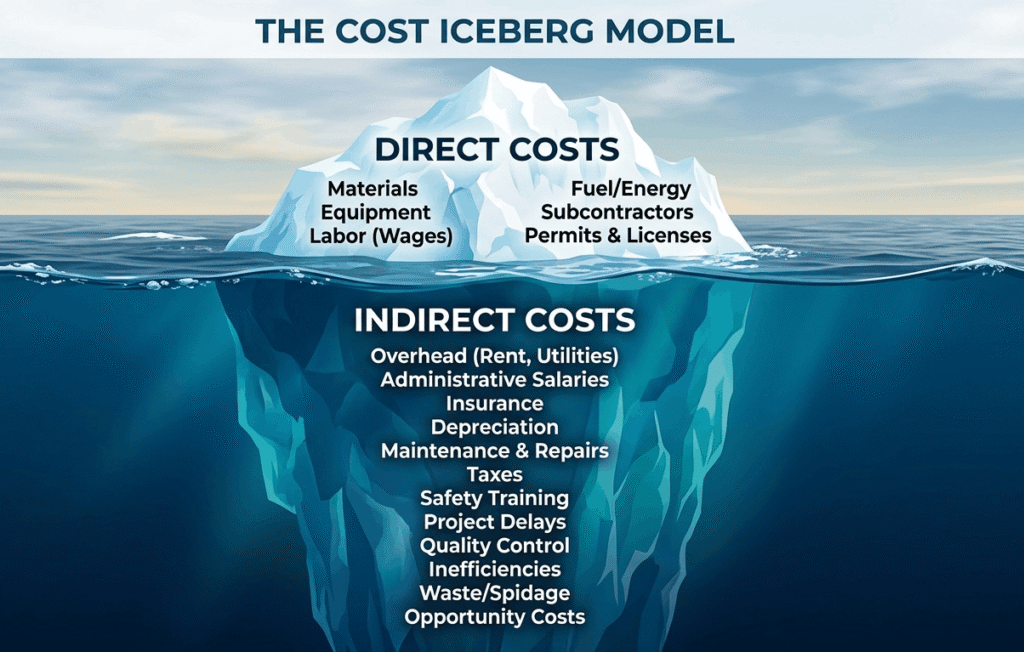
Direct vs. Indirect Costs for Breaking Down the Bill
To calculate the true employee turnover cost, you must look beyond the severance package. A professional audit identifies two distinct categories of loss.
1. The Direct Financial Hit
These are the quantifiable dollars leaving your bank account during the vacancy:
Recruitment and Headhunting: In 2026, specialized talent acquisition fees range from 20% to 35% of the first-year salary.
Advertising: The cost of maintaining a “Premium” employer brand on competitive job boards.
Interview Opportunity Cost: Every hour a senior manager spends interviewing is an hour they aren’t generating revenue.
Many CEOs only calculate “Recruitment Fees” and assume that is the total cost. This misses roughly 60% of the actual financial impact.
2. The Indirect Cultural Erosion
These costs are harder to track but more damaging to your ROI:
The “Hiring Lag”: During the 4–6 months it takes to find a replacement, the remaining staff is stretched thin, leading to “secondary burnout.”
Loss of Synergy: High-performing teams rely on “flow.” Breaking that flow can reduce department output by as much as 40%.
The Mathematics of Replacement: The 1.5x to 2.0x Rule
How much does employee turnover cost actually amount to in dollars? At 5-Star Engagement, we utilize a standardized formula for 2026 fiscal planning:
For a manager earning $100,000, the true replacement cost is $150,000.
| Role Level | Estimated Replacement Cost | Impact on 2026 ROI |
| Entry Level | 50% of Salary | Low to Medium |
| Mid-Level Manager | 125% – 150% of Salary | High |
| Specialized/Executive | 200% – 250% of Salary | Critical |
Research from the U.S. Bureau of Labor Statistics suggests that high-turnover industries see a direct correlation with lower stock price volatility, as investors now price “culture risk” into their valuations.
The Productivity “Dead Zone” and Why New Hires Cost More
A major component of the employee turnover cost is the time it takes for a new hire to become profitable. We call this the “Productivity Dead Zone.”
Months 1-3: The employee is a “net loss,” requiring more training hours than they produce in value.
Months 4-7: The employee reaches “break-even” status.
Month 8+: The employee finally begins to contribute to the company’s ROI.

The DIY Delusion and Why Internal Fixes Are Costing You More
One of the most dangerous mistakes a CEO can make is assuming that HR can “fix” culture in their spare time. This “Do It Yourself” approach to engagement often increases the employee turnover cost by delaying professional intervention.
Why Internal Teams Struggle:
Bias and Blind Spots: Internal teams are part of the system they are trying to fix. They cannot objectively see the “water they are swimming in.”
Superficial Solutions: DIY fixes usually result in “perks” (pizza parties, casual Fridays) rather than “purpose” (autonomy, career mapping).
Lack of Anonymity: Employees are rarely honest in internal surveys for fear of retaliation.
If your turnover rate exceeds 15%, stop the DIY surveys. You need an external “surgeon” to identify the systemic infection before it spreads to your top performers.
The Professional Advantage and Why Consultation is the Only Real Fix
Hiring a professional consultant to address your employee turnover cost provides an immediate ROI by providing a “Roadmap to Retention.”
The 5-Star Professional Framework:
Deep-Dive Audit: We utilize anonymous, 3rd-party data aggregation that staff actually trust.
Leadership Recalibration: We fix the “manager problem” through executive coaching.
Onboarding Optimization: We shorten the “Dead Zone” from 8 months to 4 months through structured integration.
Explore our 2026 Culture Coaching Program
FAQ to Employee Turnover Cost Queries
What is the average employee turnover cost in 2026?
The average cost remains approximately 1.5x to 2.0x the annual salary of the departing employee, factoring in recruitment, training, and the current high cost of specialized labor.
Why is turnover higher in high-growth companies?
High-growth companies often suffer from “culture debt,” where processes and leadership training don’t keep pace with headcount, leading to a disconnect between the mission and the frontline.
Can professional engagement audits really lower costs?
Yes. According to Harvard Business Review, organizations that use third-party engagement consultants see a 25% higher retention rate than those using internal DIY methods.
How do I calculate the ROI of a retention program?
Subtract the cost of the program from the total employee turnover cost saved (Number of resignations prevented × 1.5x Average Salary).
Conclusion for Moving from Retention to Engagement
The employee turnover cost is a metric that defines the health of your business. If you ignore it, you are choosing to lose capital. If you try to fix it yourself, you are likely wasting time.
Next Steps to Secure Your Profitability:
Calculate your current turnover rate: Identify which departments are the biggest “leaks.”
Stop the “Perk” Cycle: Move away from superficial fixes and toward systemic audits.
Contact a Professional: Schedule an objective culture audit to see what your employees aren’t telling you.
Stop the DIY cycle. Contact 5-Star Engagement for a comprehensive turnover audit. Let us turn your culture into your most powerful financial asset.